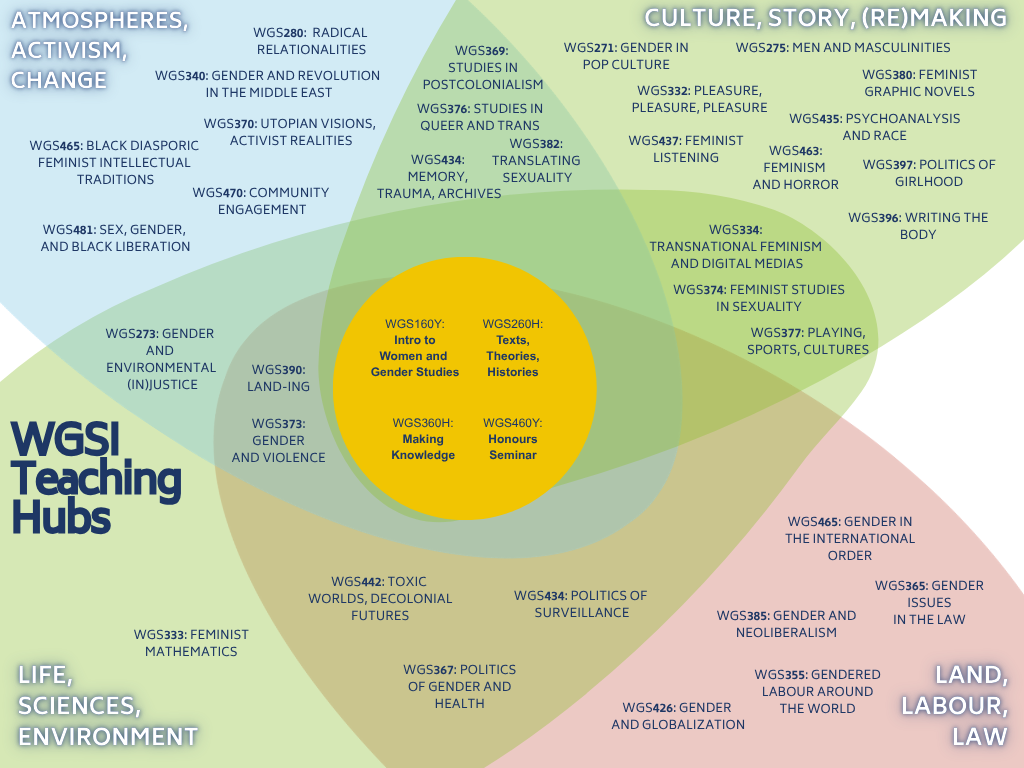
The Curriculum Hubs are thematic clusters of courses that provide coherence across the undergraduate program. They guide students in exploring interests, connect courses to big ideas in feminist theory, activism, and social justice, and highlight the interdisciplinary and diverse nature of WGSI’s curriculum. In providing clear degree pathways, the hubs can help students better understand how courses fit together and make informed choices that align with personal interests and career goals.
Students can mix and match across hubs or chart their own trajectory. The hubs are intended to guide student journeys rather than prescribe rigid pathways by offering flexibility while making connections across courses and themes more visible. Each hub includes courses across multiple competencies and knowledge areas, supporting student-centered learning and encouraging agency in shaping individualized academic journeys.
Atmospheres, Activisms, Change
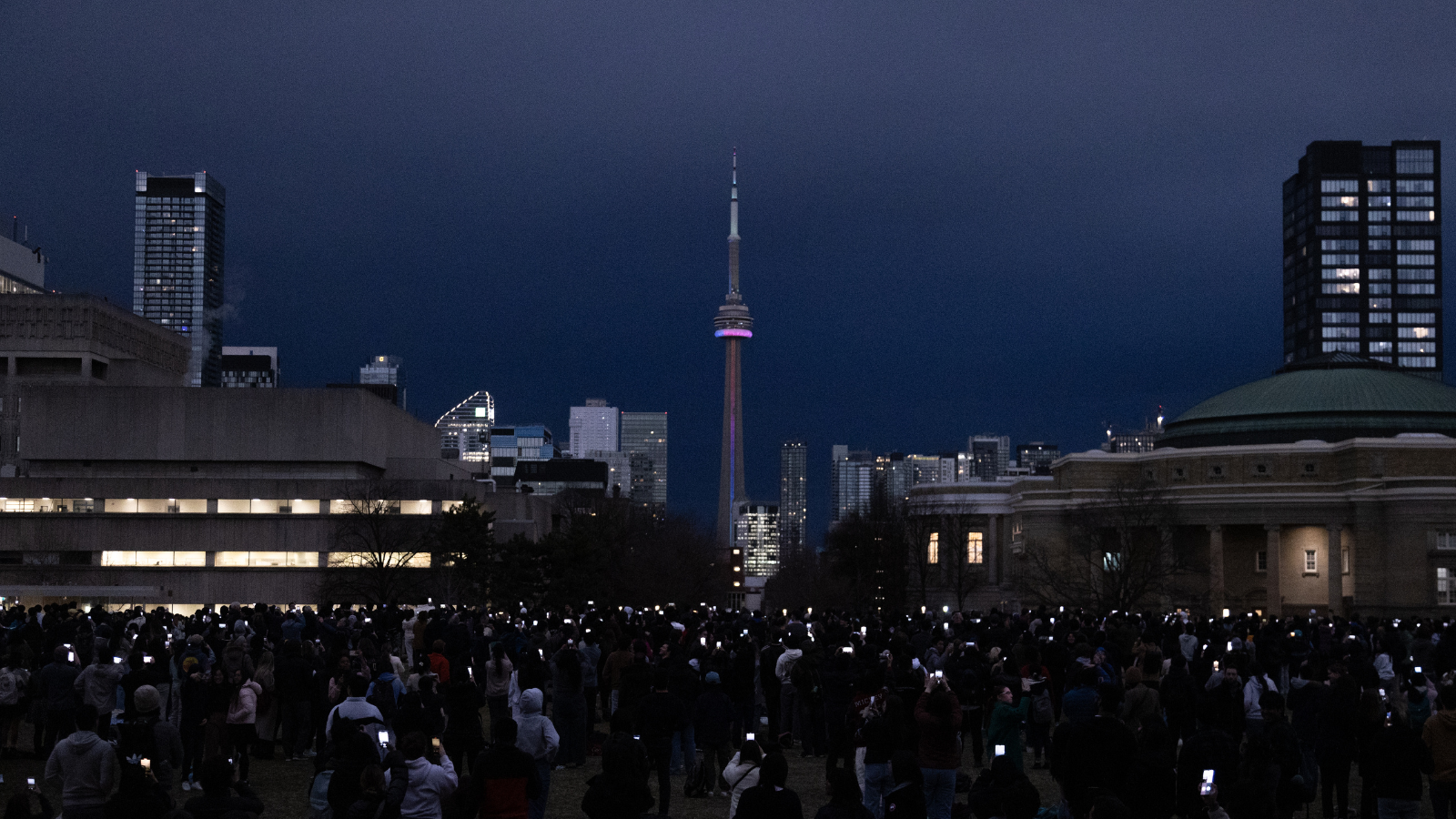
This hub examines the power of social movements, activism, and transformative initiatives on both local and global levels.
Life, Sciences, Environment
Positioned at the crossroads of health, environment, and technoscience, this hub critically examines how scientific knowledge and technological advancements intersect with social justice issues.
Land, Labour, Law
This hub examines the study of political economy through a feminist, decolonial, and justice-oriented lens, challenging students to go beyond conventional understandings to consider the social, institutional and normative structures in which individual and community work, markets and economies are embedded and connected.
Culture, Story, (re)Making
This hub positions creative expression, storytelling, and cultural production as core methodologies for analyzing and reshaping identities, challenging dominant narratives, and fostering transformative social change.
Course Categorizations
Atmospheres, Activisms, Change
200-level courses
- WGS273: Gender and Environmental (In)Justice
- WGS277: Radical Relationalities
300-level courses
- WGS340: Women and Revolution in the Middle East
- WGS369: Studies in Postcolonialism
- WGS370: Utopian Visions, Activist Realities
- WGS373: Gender and Violence
- WGS376: Studies in Queer and Trans
- WGS382: Translating Sexuality: Queer Migration/Diaspora
- WGS390: Land-ing: Indigenous and Black Futurist Spaces
400-level courses
- WGS434 (special topics): Memory, Trauma, Archives
- WGS465 (special topics): Black Diasporic Feminist Intellectual Traditions
- WGS470: Community Engagement
- WGS481: Sex, Gender, and Black Liberation from Black Power to #BlackLivesMatter
Life, Sciences, Environment
200-level courses
- WGS273: Gender and Environmental (In)Justice
300-level courses
- WGS333 (special topics): Feminist Mathematics
- WGS334 (special topics): Transnational Feminism and Digital Media
- WGS367: Politics of Gender and Health
- WGS373: Gender and Violence
- WGS374: Feminist Studies in Sexuality
- WGS377: Playing, Sports, Cultures
- WGS390: Land-ing: Indigenous and Black Futurist Spaces
400-level courses
- WGS434 (special topics): Politics of Surveillance
- WGS442: Toxic Worlds, Decolonial Futures
Culture, Story, (re)Making
200-level courses
- WGS271: Gender in Pop Culture
- WGS275: Men and Masculinities
300-level courses
- WGS332 (special topics): Pleasure, Pleasure, Pleasure
- WGS334 (special topics): Transnational Feminism and Digital Media
- WGS369: Studies in Postcolonialism
- WGS374: Feminist Studies in Sexuality
- WGS376: Studies in Queer and Trans
- WGS377: Playing, Sports, Cultures
- WGS396: Writing the Body
- WGS380: Feminist Graphic Novels
- WGS382: Translating Sexuality: Queer Migration/Diaspora
- WGS397: Politics of Girlhood
400-level courses
- WGS434 (special topics): Memory, Trauma, Archives
- WGS435 (special topics): Psychoanalysis and Race
- WGS437 (special topics): Feminist Listening
- WGS463 (special topics): Feminism and Horror